EAB Treatment in Appleton & NE Wisconsin: It May Not Be Too Late
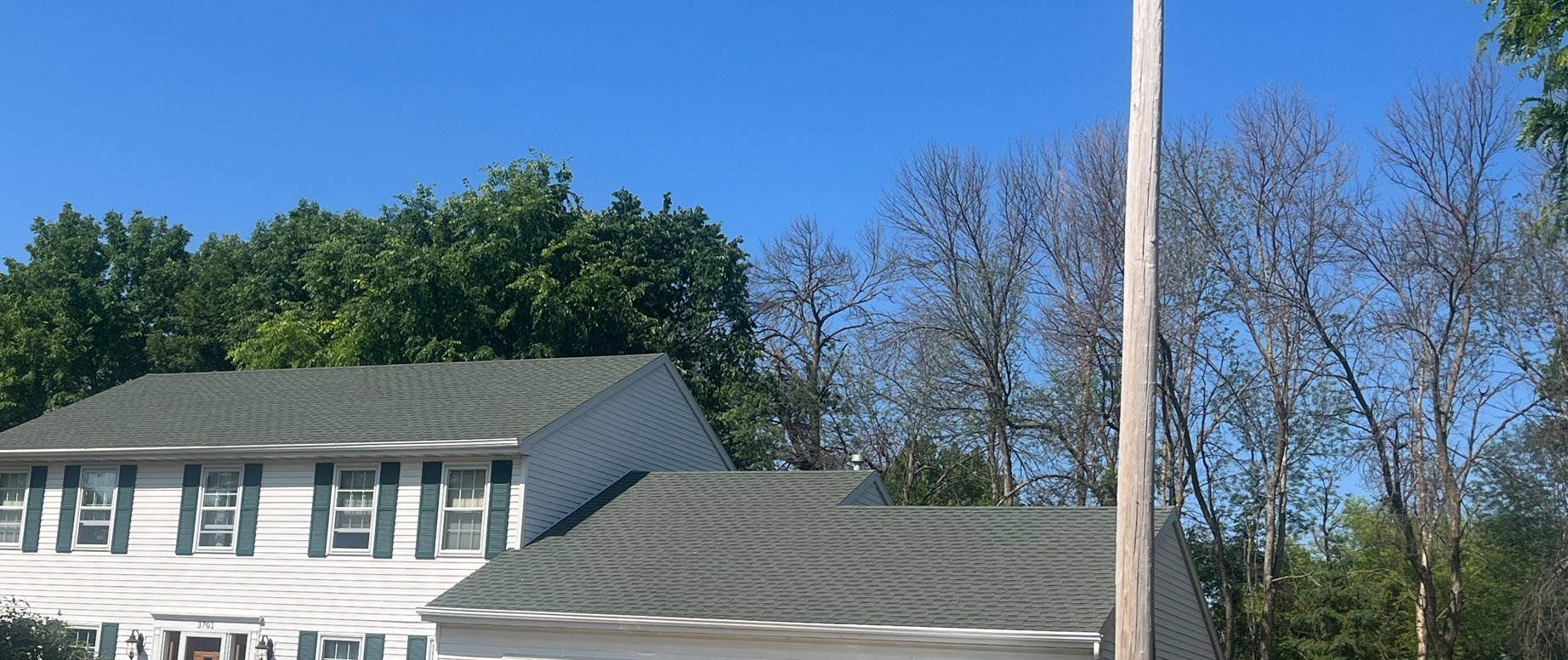
The photo above shows a house with treated ash trees (left) and untreated ash trees behind it.
2026 Season Was Promising for our Ash Tree Team
For the past several years, we have wondered how much longer we would be able to say this: Your ash tree may still be worth saving.
Emerald Ash Borer has already killed an enormous number of ash trees throughout Wisconsin, including here in the Fox Valley and Northeast Wisconsin. A few years ago, even our own tree experts wondered whether we were approaching the point where most untreated ash trees would simply be too far gone to save.
Then came the 2026 treatment season. And frankly, we have been surprised.
Lowney’s Tree Service EAB specialist Terry has completed approximately 270 Emerald Ash Borer treatment jobs this year, including many trees that Lowney’s first treated two or four years ago.
His assessment of those returning trees? About 95% are still looking good.
Even more encouraging, we continue to receive calls from homeowners with ash trees that have never been treated — and many of those trees are still healthy enough that we believe they can be saved. So if you have an ash tree you value, don’t assume it is too late. Have us look at it first.
Can an Ash Tree Still Be Saved From Emerald Ash Borer?
Yes, if the tree is still healthy enough when treatment begins. That “if” matters.
Emerald Ash Borer larvae feed underneath the bark, damaging the tissue the tree needs to move water and nutrients. An untreated infestation eventually kills the tree. But professional insecticide treatment can protect ash trees that still have most of their canopy and enough overall health to respond to treatment.
That is why the first step at Lowney’s isn’t automatically an injection. It is an evaluation. We look at the crown and overall condition of the tree and determine whether we believe treatment is still a good investment.
As Terry puts it, “If the tree looks healthy, we can pretty much save it. If it’s not good enough to treat, I tell them it’s not good enough to treat. But if it’s good enough to treat, I tell them that too.”
That philosophy is important to us. Lowney’s removes trees. We treat trees. We do both. Our goal isn’t to sell you whichever service is easiest. Our goal is to tell you which option makes the most sense for your tree.
The treatment season is Spring through the end of August, both depending on the weather, which determines when the trees end and begin their dormancy.
Our 2026 EAB Results Have Given Us More Confidence
Terry keeps records of the ash trees he treats going back to 2020.
During the 2026 season, a large percentage of his EAB work has been repeat treatment on trees first injected two or four years ago. Of those returning trees, he estimates that fewer than 5% had declined to the point that they no longer looked good.
In other words, approximately 95% of those previously treated ash trees were still doing well enough to continue the treatment program.
Those aren’t results from a laboratory somewhere. Those are ash trees growing in Appleton, the Fox Valley, Green Bay and communities throughout Northeast Wisconsin.
And some of them are large, mature ash trees that would be extremely difficult — and in many cases impossible within our lifetime — to replace with a newly planted tree.
Not All Emerald Ash Borer Treatments Are the Same
This is another part of the EAB story that homeowners don’t always realize. There is a major difference between simply saying that an ash tree was “treated” and knowing what treatment was used, how it was applied and whether the person applying it knows what he or she is doing.
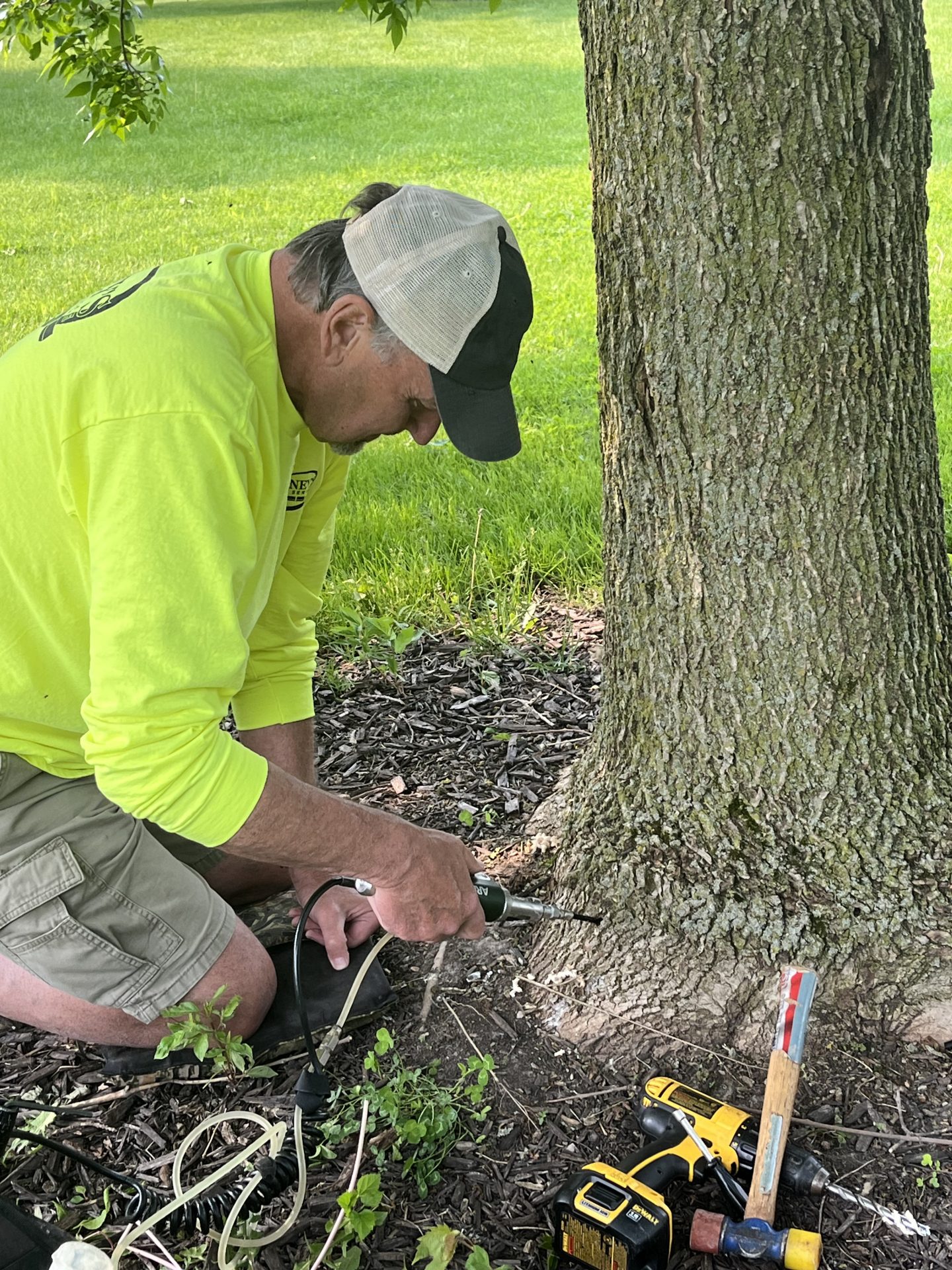
Lowney’s uses a premium professional trunk-injection treatment. The material is injected directly into the tree, where it moves through the tree’s vascular system and protects it against Emerald Ash Borer.
We intentionally use professional-grade treatment rather than choosing a cheaper product simply because it costs less. Some of the strongest professional EAB products are restricted-use pesticides available for purchase and application only by properly certified applicators, and Wisconsin regulates and licenses commercial pesticide applicators.
There really is a difference in what is being put into the tree. That matters when you’re trying to protect a 30-, 40- or 50-year-old ash.
How Often Does an Ash Tree Need EAB Treatment?
Our Emerald Ash Borer injections provide two years of protection, so customers on our program typically have their trees treated every other year.
That is why Terry sees so many familiar properties during the season. He isn’t just treating new ash trees. He is returning to trees Lowney’s treated previously, checking their condition and providing their next scheduled injection.
And those returning trees are one of the biggest reasons we’re increasingly confident in the treatment program. We can see the results.
“I Heard EAB Treatment Doesn’t Work.”
We hear that, too. Sometimes it comes from someone who had a different treatment used on a tree. Sometimes the tree may already have been too badly damaged before treatment began. And sometimes homeowners have simply been told that treating ash trees isn’t worthwhile anymore.
Our experience says otherwise. Treatment works extremely well on the right tree, when the right treatment is used at the right time.
That doesn’t mean every ash tree can be saved. Some can’t. If an ash has suffered significant canopy loss and decline, removal may be the responsible recommendation. University Extension guidance similarly notes that treatment is most successful while an ash still retains most of its canopy.
But we also don’t believe a healthy ash should be condemned simply because Emerald Ash Borer is present in Wisconsin.
Should I Treat My Ash Tree or Remove It?
That decision starts with the tree. A large, healthy ash tree provides shade, character and value that can’t quickly be replaced. If the tree is structurally sound and healthy enough to respond to treatment, preserving it can make a great deal of sense.
If it has already declined beyond the point where we believe treatment is worthwhile, we’ll tell you that too.
We treat trees that we believe we can save. We remove trees when removal is the better answer. That’s the advantage of asking a tree company that does both.
If you’re not sure whether your ash tree is a candidate for treatment, contact us for an evaluation.
We’ll tell you whether we believe your tree is worth saving — and if it is, we’ll help you protect it.
Tags: